Indo-West Pacific, from the Red Sea and East Africa to Hawaii (range of the species in the strict sense under revision).
Description
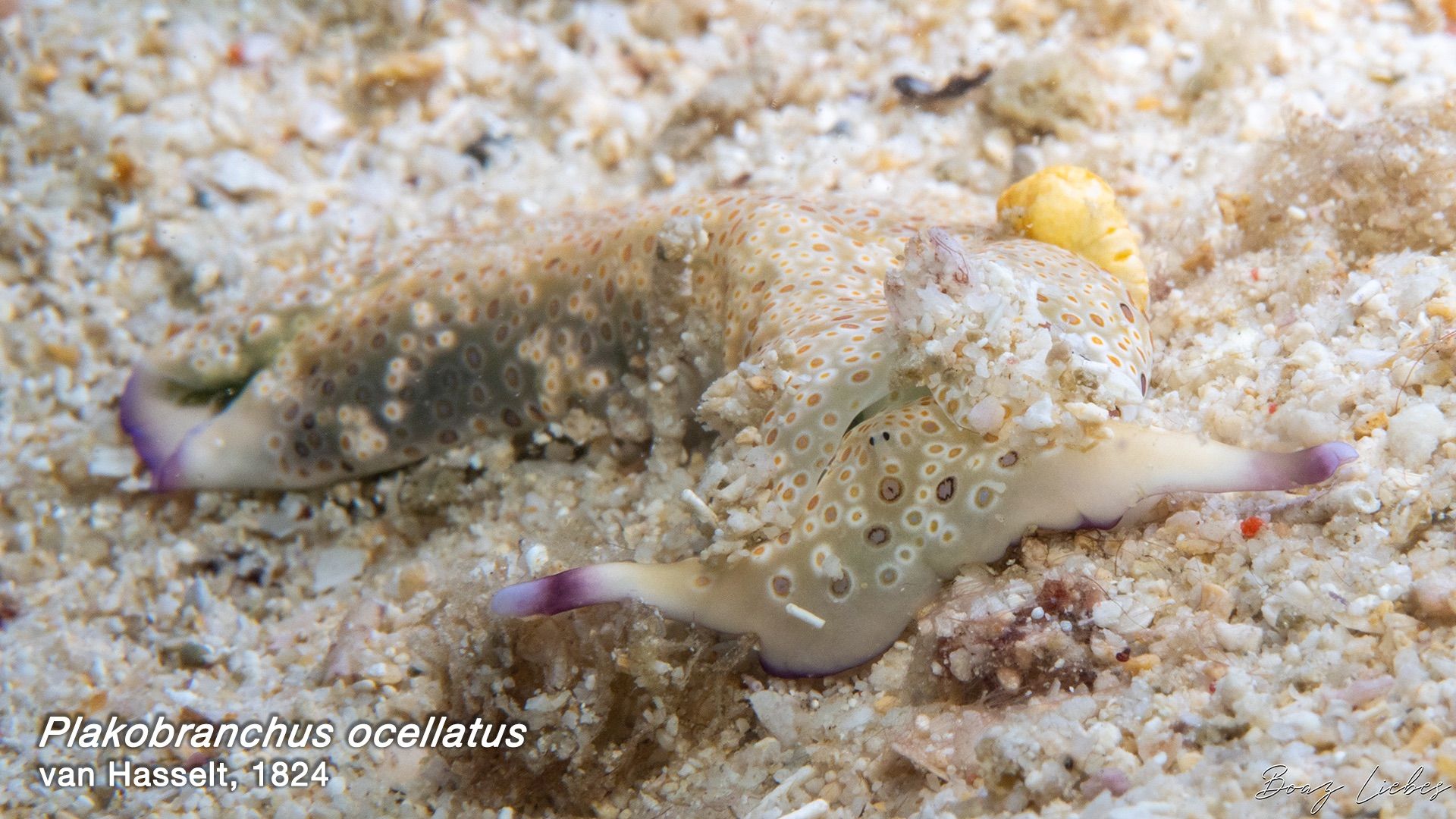
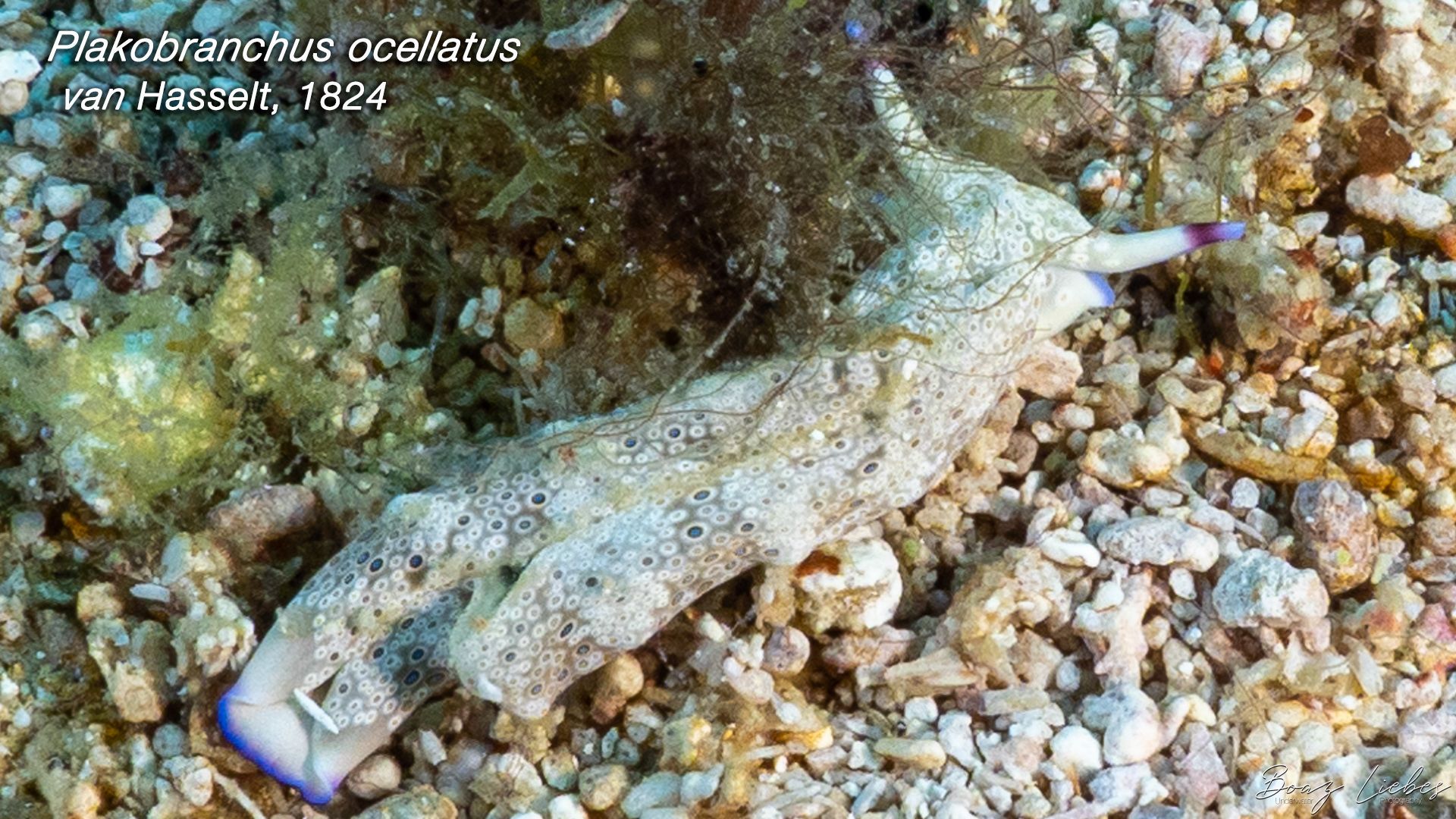
A common but well-camouflaged sacoglossan of shallow lagoons and reef flats, often half-buried in sand. It is a model species for 'stolen' chloroplasts (kleptoplasty), storing huge numbers of green chloroplasts from its algal food in ridges hidden under its parapodia. Molecular work shows the traditional P. ocellatus is a complex of about ten lineages, some since described as separate species.
Flattened body with broad parapodia folded over the back and prominent rhinophores pointing sideways. Colour very variable: cream, pale brown or pale green with dense pale spots, sometimes with eye-like green or blue ocelli. Opening the parapodia reveals longitudinal ridges coloured bright green by chloroplasts.
Similar species
Plakobranchus papua is intense ochre with white spots, black rhinophores with purplish tips and yellow dashes along the parapodial edge. Other cryptic lineages of the complex can only be separated genetically.
≈Habitat & diet
Habitat
Sandy bottoms of shallow lagoons, reef flats and tide pools, usually shallower than about 5 m; burrows into sand when disturbed.
Food
Green algae such as Halimeda and Caulerpa, whose chloroplasts it retains long-term.