Red Sea (type locality El-Tor, Sinai) and Indo-Pacific; the exact range of the species in the strict sense is under revision after the 2023 split.
Description
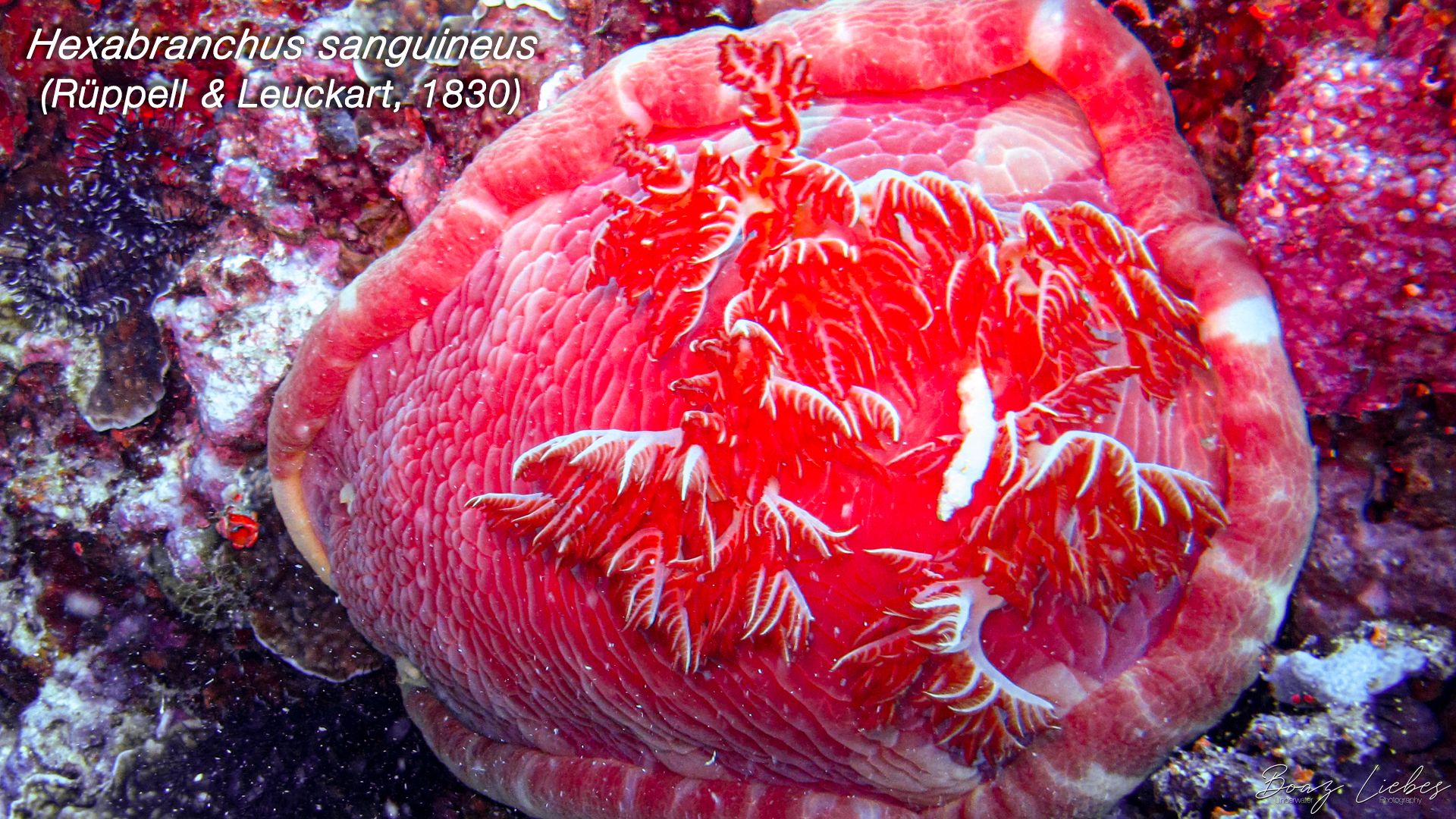
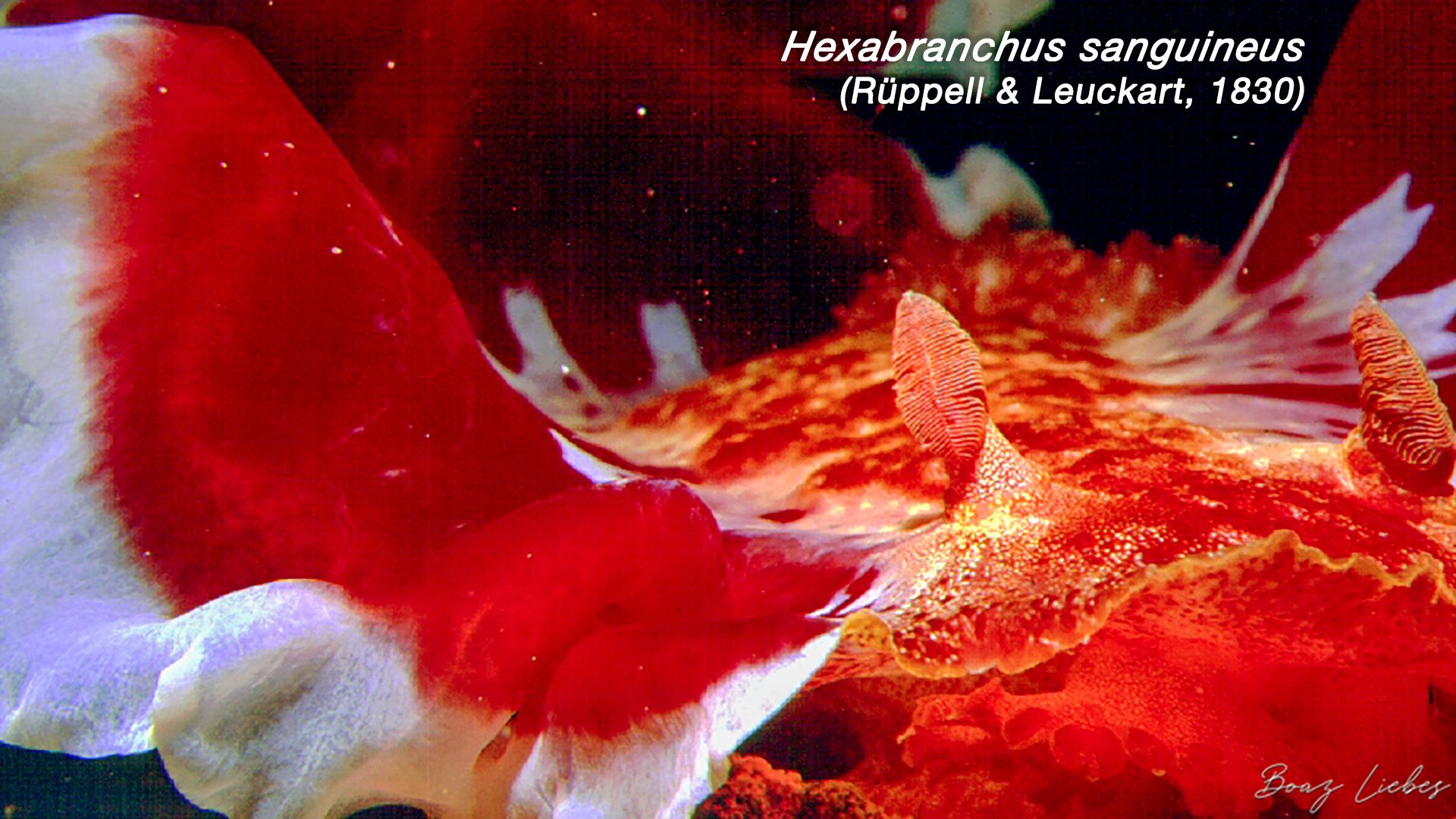
The Spanish Dancer, a very large dorid and the only nudibranch genus capable of sustained free swimming, undulating its unfurled mantle like a flamenco dress, mostly at night. A 2023 revision (Tibiriçá et al.) showed that the name had been used for at least five species, so many Indo-Pacific animals formerly called H. sanguineus may belong to others such as H. lacer. It often hosts the emperor shrimp Periclimenes imperator and lays large red to pink spiral egg ribbons.
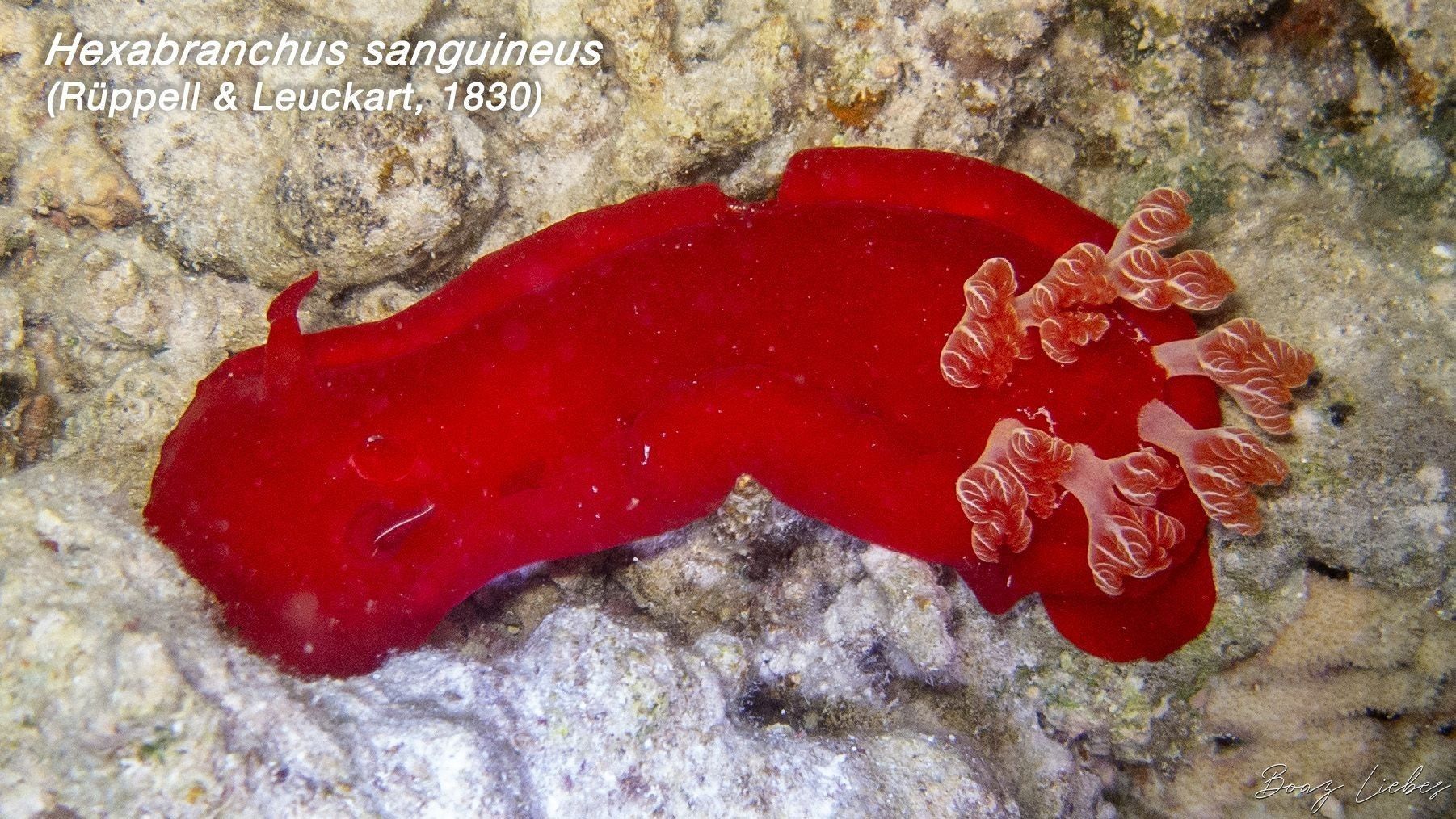
Large, flattened crimson to blood-red animal with a broad white mantle border (interrupted at the front) and bands of fine white striations along the back. Six separate branched, non-retractile gills surround the anus. When disturbed it unrolls the mantle, revealing the red and white edge, and swims off.
Similar species
Hexabranchus lacer (widespread Indo-West Pacific) is very variable, often with red and white blotches; other members of the complex (H. aureomarginatus, H. giganteus, H. sandwichensis) differ in colour pattern and gill details and are best separated by DNA.
≈Habitat & diet
Habitat
Coral reefs, from 1 to about 50 m; active mainly at night.
Food
Sponges (notably Halichondriidae), from which it sequesters defensive macrolides that it also passes into its egg ribbons.